



Get the Zero-Day Vulnerability Mitigation Playbook
Read it before your next zero-day arrives

The objective shifts from remediation or permanently fixing the Zero-Day Vulnerability Mitigation: rendering the vulnerability unexploitable."

HCL BigFix · HCLSoftware
Why "Wait for the Patch" Doesn't Work Anymore
The flaws aren't the problem. The volume is.
Security teams cannot patch every vulnerability as it appears. With tens of thousands of CVEs disclosed each year and AI adding more pressure, a patch-only queue leaves exposure open while fixes are tested, deployed, and verified.
Mitigation changes that. Organizations do not need to wait for every patch to close every gap. They can reduce risk today using the infrastructure they already have.
New CVEs identified in 2025 alone — a 263% increase from 2020.
Source: NIST National Vulnerability Database
Average time an organisation takes to patch an open vulnerability
Source: Verizon DBIR 2026
Inside the Playbook 10 ways to deny a zero-day exploit before the patch exists.
The playbook breaks down ten endpoint-configuration strategies used to neutralize zero-days without a vendor fix. Three sit at the core of the framework and they're the place to start.
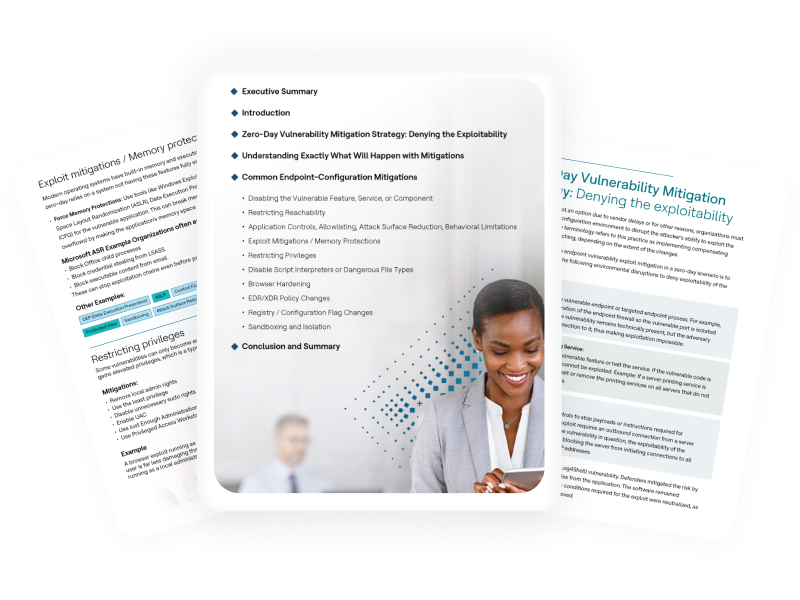
Three core strategies
Deny Reachability
Cut off access to the vulnerable system or process. As the playbook puts it: "The vulnerability remains technically present, but the adversary cannot establish a connection to it, thus making exploitation impossible."
Deny Use of the Running Service
Turn off the exposed feature instead of the whole application. The logic is simple: If the vulnerable code is not running in memory, it cannot be exploited.
Deny the Payload Delivery
Block the network connection an exploit needs to actually deliver its attack; even if the attacker reaches the flaw, the payload never lands.
Do It Everywhere, Fast and Know What Breaks
A mitigation that takes three weeks to roll out organization-wide isn't a mitigation. The playbook covers how to test, deploy, and monitor changes across your entire estate in hours and how to know in advance what functionality you might disrupt.
